
Advertisements
Traffic laws in the United States and Mexico are fundamental to ensuring road safety and order on the highways of both countries.


Driving in a foreign country can be challenging, especially when traffic laws differ significantly from those we are familiar with. Both the United States and Mexico have well-structured traffic systems, but with unique characteristics that every driver should be aware of before getting behind the wheel.
In this article, we'll explore the main differences and similarities between the traffic laws of both countries, covering everything from speed limits to penalties for violations. Knowing these regulations will not only help you avoid fines, but will also contribute to your safety and the safety of other road users. 🚗
🇺🇸 Transit system in the United States: main features
The U.S. road system is characterized by its decentralization. Although federal traffic laws exist, each state has the authority to establish its own specific regulations. This means that speed limits, seat belt requirements, and other regulations can vary considerably from state to state.
Advertisements
In the United States, driving is on the right side of the road, just like in Mexico. Traffic signs are usually in English, although bilingual signs are common in areas with large Hispanic populations. Drivers must carry a valid driver's license, vehicle registration, and proof of insurance at all times.
An important feature of the U.S. system is the "right-on-red-light" rule. In most states, it is permitted to turn right on a red light after coming to a complete stop and verifying that there is no cross traffic, unless there is a sign that explicitly prohibits it.
Advertisements
Speed limits and specific zones
Speed limits in the United States vary depending on the type of road and the state. In residential areas, the typical speed limit is 25 to 35 mph (40-56 km/h). On state highways, it can range from 55 to 65 mph (88-105 km/h), while on interstate highways, the limit is usually 65 to 80 mph (105-129 km/h) in states with large desert areas like Texas or Nevada.
School zones require special attention, with speed limits that may be reduced to 15-20 mph (24-32 km/h) during school arrival and dismissal times. Violating these limits carries significantly higher fines and can result in the suspension of your driver's license.
Regulations on alcohol consumption
Driving under the influence of alcohol is a serious offense in all states. The legal blood alcohol concentration (BAC) limit is 0.08% for drivers 21 and older. For underage drivers, many states have a “zero tolerance” policy, where any detectable amount of alcohol can result in DUI charges.
The consequences of a DUI conviction can include fines of thousands of dollars, license suspension, mandatory installation of alcohol ignition interlock devices, and even jail time in cases of repeat offenses or accidents with injuries.
🇲🇽 Traffic regulations in Mexico: what you should know
Mexico has a traffic system that combines federal regulations with state and municipal rules. The Federal Roads, Bridges, and Motor Transport Law regulates federal highways, while each state has its own traffic regulations for local roads.
As in the United States, driving is on the right in Mexico. Traffic signs follow international standards and are in Spanish. Drivers must carry a valid driver's license, vehicle registration, and insurance policy, although compliance with the latter requirement varies by state.
One notable difference from the United States is that right turns on red lights are generally not permitted in Mexico, except in locations where a specific sign authorizes them. Drivers must wait for the green light to make any turn.
Maximum speed limits on Mexican highways
Speed limits in Mexico are expressed in kilometers per hour. In urban areas, the typical limit is 40 to 60 km/h, although on some main avenues it can be increased to 80 km/h. On two-lane federal highways, the limit is usually 90 to 100 km/h.
Toll roads allow speeds of up to 110 km/h, although this limit may be higher on specific sections. It is important to note that speed cameras are becoming increasingly common on the country's main roads, especially on toll highways.

Breathalyzer and prevention programs
Mexico has implemented breathalyzer programs in major cities such as Mexico City, Guadalajara, and Monterrey. The legal blood alcohol limit varies by state, but it generally ranges between 0.04% and 0.08%, making it stricter than in the United States for most Mexican states.
Breathalyzer checkpoints are typically conducted on weekends and holidays. Penalties include fines, vehicle impoundment, and administrative arrest for up to 36 hours. In some states, repeat offenses can result in permanent driver's license suspension.
📊 Comparison between both road systems
Although the United States and Mexico share the rule of driving on the right, there are significant differences in the enforcement and severity of traffic laws. The United States tends to have a stricter and more automated enforcement system, with considerably higher fines.
In the United States, the driver's license point system is common in most states. Accumulating a certain number of points for traffic violations can result in license suspension. In Mexico, although some states have implemented similar systems, their application is neither as widespread nor as strict.
Differences in fines and penalties
Traffic fines in the United States can be considerably higher than in Mexico. A speeding ticket in the US can cost between $150 and $500, depending on the state and the severity of the infraction. In Mexico, fines vary by state, but are generally more affordable, although this may also reflect differences in purchasing power.
The United States has a more rigorous system for recording traffic violations, which can affect the cost of car insurance. Insurance companies review driving records and increase premiums for drivers with recent violations. In Mexico, this system is less developed, although it is gradually evolving.
Road signs and markings
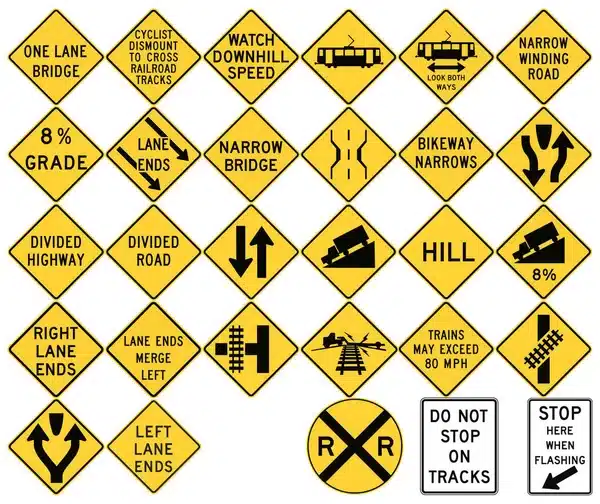
Both countries use signaling systems based on international standards, but with some variations. The United States uses the Manual on Uniform Traffic Control Devices (MUTCD), while Mexico follows the regulations of the Ministry of Communications and Transportation (SCT).
One notable difference is the use of units of measurement: the United States uses miles per hour (mph), while Mexico uses kilometers per hour (km/h). This can be confusing for drivers crossing the border, so it's essential to familiarize yourself with the conversion: 1 mile is approximately equal to 1.6 kilometers.
🚦 Rules on the use of seat belts and child restraint systems
Both the United States and Mexico have mandatory seat belt laws. In the United States, all states require front-seat occupants to wear seat belts, and most also require rear-seat passengers. Fines for not wearing a seat belt can reach up to $200.
In Mexico, seat belt use is mandatory in all vehicle seats according to federal law, although enforcement varies by state. Awareness campaigns have significantly increased compliance in recent years, especially in large cities.
Protection for minors
The United States has very strict regulations regarding child restraint systems. Each state specifies requirements based on the child's weight, age, and height. Generally, infants must travel in rear-facing car seats until at least age 2, and children must use appropriate restraint systems until they reach a certain height (usually 4'9" or 145 cm).
Mexico has also strengthened its child safety regulations. Federal law mandates that children under 12 must travel in the back seat and use appropriate child restraint systems for their age and size. However, enforcement of these regulations varies considerably among states and municipalities.
📱 Use of mobile devices while driving
Using a cell phone while driving is a growing concern in both countries. In the United States, many states have implemented "hands-free" laws, prohibiting the use of mobile devices while driving. Fines can exceed $500 in some states, such as California and New York.
In Mexico, most states prohibit the use of cell phones without hands-free devices. Mexico City, for example, imposes significant fines for this infraction. Texting while driving is prohibited in virtually all parts of the country.
Both countries recognize mobile device use as a leading cause of distracted driving, responsible for thousands of accidents each year. Awareness campaigns emphasize that no message or call is worth more than a human life. 📵
🛣️ Toll highways vs. free roads
Mexico has an extensive system of toll highways operated by private concessionaires or the government. These roads are generally in better condition, with emergency services and roadside assistance. Alternatively, free federal highways are available, although their conditions can be more variable.
The United States also has a toll road system, although less extensive than Mexico's. Northeastern states, such as New York, New Jersey, and Pennsylvania, have numerous toll highways. Many use electronic systems like E-ZPass for automatic toll collection without the need to stop.
Considerations for cross-border travelers
Drivers crossing the U.S.-Mexico border must be prepared to comply with the requirements of both countries. It is essential to have valid vehicle insurance in the destination country, as insurance policies from one country are generally not valid in the other.
For U.S. citizens driving in Mexico, it is recommended to purchase specific Mexican insurance before crossing the border. Similarly, Mexicans driving in the United States should verify that their insurance covers incidents in U.S. territory or purchase an additional policy.
🚔 Procedures during police stops
In the United States, when a police officer signals you to stop (usually by activating lights and siren), you should pull over safely as soon as possible, keep your hands visible on the steering wheel, and wait for the officer's instructions. It is important to remain calm and follow the officer's directions precisely.
Drivers have rights during a police stop, including the right to remain silent and to request the presence of a lawyer if arrested. It is crucial to be respectful and cooperative, avoiding sudden movements that could be misinterpreted.
In Mexico, the procedure is similar: stop safely when instructed by the authorities, keep your hands visible, and provide documentation when requested. It is important to verify that the person stopping you is indeed a uniformed traffic officer or identified police officer.
Corruption prevention and your rights
Although Mexico has worked to reduce corruption in traffic enforcement, some drivers may still encounter situations where they are asked for informal "arrangements." It is important to know that you have the right to receive an official traffic ticket as long as due process is followed.
Many Mexican states have implemented online payment systems for traffic violations and more transparent procedures to reduce discretion and opportunities for corruption. If you believe you were a victim of abuse of authority, you can file a complaint with local or state human rights organizations.
🌙 Special conditions for night driving
Driving at night presents additional challenges in both countries. In the United States, extra caution is advised in rural areas where animals may be crossing roads. The use of high beams is common on roads with little traffic, but they should be dimmed when an oncoming vehicle is approaching.
In Mexico, driving at night on rural roads requires extra caution due to the potential presence of vehicles without adequate lighting, pedestrians, or animals on the road. Authorities recommend avoiding nighttime road trips whenever possible, especially in rural areas or regions with safety warnings.
⚠️ Defensive driving: a universal practice
Regardless of differences in specific laws, defensive driving is essential in both countries. This involves maintaining a safe distance from other vehicles, anticipating the actions of other drivers, respecting speed limits, and adapting to weather and traffic conditions.
Anticipation is key: constantly check your mirrors, signal lane changes or turns in advance, and maintain a courteous attitude toward other road users. These universal principles of road safety transcend borders and specific legal systems.
Both countries offer defensive driving courses that can help improve driving skills and, in some cases, reduce car insurance costs or eliminate points from previous traffic violations. Investing time in continuing driver education is always a smart decision.
🔧 Preparing the vehicle for cross-border travel
Before embarking on a trip between the United States and Mexico, it's essential to ensure your vehicle is in optimal condition. Check the lights, brakes, tires, and safety systems. Pack an emergency kit that includes reflective triangles, jumper cables, basic tools, and water.
If you are traveling with a vehicle registered in the United States into the interior of Mexico (beyond the border area), you will need to obtain a temporary vehicle import permit. This process is carried out at Banjercito offices on the border and requires specific documentation for the vehicle and the driver.
Similarly, vehicles with Mexican license plates entering the United States must comply with U.S. safety and emissions regulations. While there are generally no issues for short stays, it's important to check the specific requirements of the state you plan to visit.
💡 Final recommendations for safe and legal driving
Knowing and respecting traffic laws is every driver's responsibility. In both the United States and Mexico, regulations exist to protect lives and ensure an orderly flow of traffic. Before driving in any new area, take the time to familiarize yourself with the specific local regulations.
Use technology to your advantage: mobile apps can help you learn about traffic signs, speed limits, and specific regulations. Stay up-to-date on changes in legislation, especially if you frequently drive between the two countries or plan an extended stay.
Remember that driving is a privilege that comes with significant responsibilities. Your behavior behind the wheel affects not only your safety, but also the safety of passengers, pedestrians, and other drivers. Courtesy, patience, and respect for the rules are fundamental to building safer road cultures throughout the region. 🚗✨
Whether you're driving on the wide freeways of Texas, the busy streets of Mexico City, or crossing the border on a transnational trip, knowledge of traffic laws will give you confidence and security every mile of the way.